Grief Support, Healing and Wellness
Chocolate and Gum, Valentine’s Day Dangers for Dogs and Cats
Feb
Valentine’s Day is filled with sweet moments, chocolate treats, candy bowls, and gum tucked into purses or gift bags. While these items are meant for people, they can be extremely dangerous for the animals who share our homes.
Two common Valentine’s Day treats deserve special attention, chocolate and sugar-free gum.
Chocolate, Dangerous for Dogs and Cats
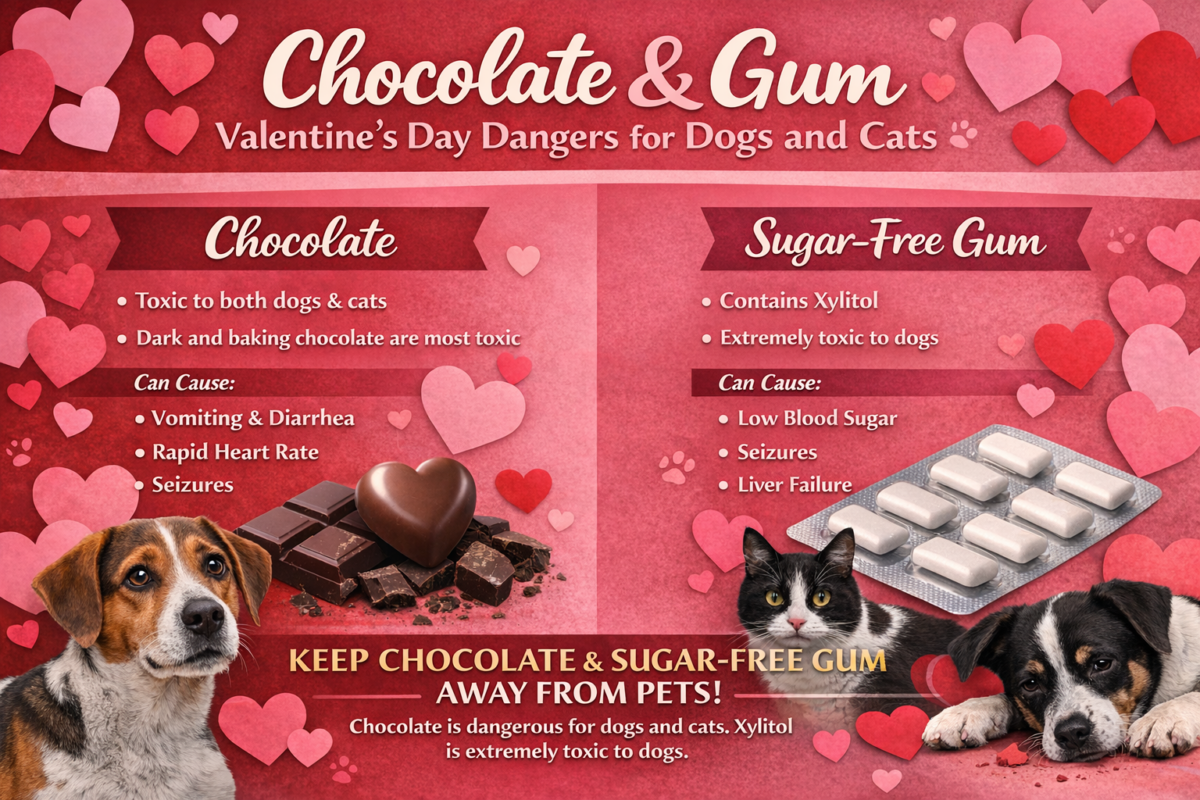
Chocolate contains theobromine and caffeine, substances that dogs and cats cannot metabolize efficiently. These compounds build up in the body and can cause serious illness.
Dark chocolate, baking chocolate, and cocoa powder are the most toxic forms, but even small amounts of milk chocolate can be harmful, especially for smaller animals.
Chocolate exposure can cause:
- Vomiting and diarrhea
- Rapid or irregular heart rate
- Tremors or restlessness
- Seizures
- Collapse
Cats are less likely to seek out chocolate, but when ingestion occurs, the effects can be severe.
Sugar-Free Gum, Especially Dangerous for Dogs
Sugar-free gum often contains xylitol, a sugar substitute that is extremely toxic to dogs. Even one piece of gum can be enough to cause a life-threatening emergency.
When a dog ingests xylitol, it triggers a rapid release of insulin, leading to a sudden drop in blood sugar. In severe cases, this can result in seizures and complete liver failure within hours.
Xylitol exposure in dogs can cause:
- Sudden weakness or collapse
- Vomiting
- Loss of coordination
- Seizures
- Liver failure
Cats do not show the same documented insulin response to xylitol as dogs, but ingestion is still unsafe and should always be taken seriously.
What To Do If Exposure Happens
If you believe your dog or cat has eaten chocolate or sugar-free gum, act immediately.
- Do not wait for symptoms to appear
- Do not induce vomiting unless directed by a veterinarian
- Remove any remaining product from your animal’s reach
Contact your veterinarian right away or go to the nearest emergency animal hospital. If a veterinarian is not immediately available, contact a pet poison helpline for guidance while seeking emergency care.
Time matters with both chocolate and xylitol exposure. Early treatment significantly improves outcomes and can save your animal’s life.
Why Valentine’s Day Increases the Risk
During Valentine’s Day, chocolate and gum are often left within easy reach, on tables, nightstands, desks, or inside purses and gift bags. Most poisonings happen quickly and quietly, often when no one is watching.
Love Means Protection
Valentine’s Day is about love, and love means protecting the ones who trust us completely. Being mindful of what is within reach and acting quickly if something goes wrong can prevent a devastating emergency.
This Valentine’s Day, let love be the only thing shared.
Important Pet Poison Contacts
ASPCA Animal Poison Control Center (APCC)
Phone: 888-426-4435
Website: https://www.aspca.org/pet-care/animal-poison-control
- Available 24/7
- Staffed by veterinary toxicology experts
- A consultation fee may apply
- Can coordinate directly with your veterinarian
Pet Poison Helpline
Phone: 855-764-7661
Website: https://www.petpoisonhelpline.com
- Available 24/7
- Covers dogs, cats, and other animals
- One-time fee per case
- Provides treatment recommendations for vets
If You Suspect Poisoning
Do not induce vomiting unless instructed by a professional
Call your veterinarian immediately
If they are unavailable, go to the nearest emergency animal hospital
Use a poison helpline while traveling or waiting for care
